Anchor Work: Return to the Sorbonne Talk (2025) — Analog UX, Democratic Aesthetics, and the Future of Prototyping
This presentation formalized the UX Now methodology within a global academic discourse.
Formal Statement of Thematic Body of Work
Overview
The UX Innovation Cluster represents Thomas Girard’s sustained, multi-year contributions to advancing user experience through original frameworks, tactile methodologies, and globally distributed educational formats. This body of work spans white papers, handbooks, comparative scholarship, academic talks, and case-based explorations of prototyping. Together, these works articulate a distinctive, practice-driven perspective on UX innovation grounded in analog methods, cross-disciplinary thinking, and accessible pedagogy.
⸻
1. Foundational Framework – UX Now White Paper
Girard’s UX Now white paper is the core of this cluster: a comprehensive articulation of a tactile, analog-first UX methodology designed for contemporary digital environments. With over 1,500 views on SlideShare, Creative Commons licensing, and distribution across academic and professional channels, the white paper has become a widely referenced canonical document.
It establishes the philosophical and methodological basis of Girard’s user experience approach.
⸻
2. Applied Framework – UX Now Handbook
The UX Now Handbook distills the white paper into a highly accessible, practice-oriented guide. Positioned between academic writing and workshop material, the handbook provides designers, students, and educators with a structured set of exercises, examples, and principles.
Its publication on platforms such as Gumroad ensures broad accessibility and extends the framework’s reach beyond formal learning environments.
⸻
3. Comparative Scholarship – UX Now and Design Thinking
Girard’s comparative analysis positions UX Now in dialogue with dominant industry methodologies such as Design Thinking. This work highlights the divergence between high-level business frameworks and embodied, tactile prototyping practices.
By mapping where UX Now extends or corrects limitations in conventional approaches, Girard contributes to methodological clarity, pedagogical progress, and the broader debate around the future of UX education.
⸻
4. Case Study Series – Tactile Prototyping in Practice
Building on examples embedded in the white paper, this series formalizes Girard’s case-based demonstrations of analog prototyping in real-world scenarios. These cases show how simple, low-fidelity, tactile tools can generate unexpected insights, reduce cognitive load, and accelerate innovation, serving as empirical evidence of the UX Now methodology at work.
⸻
5. Global Academic Engagement – Return to the Sorbonne (2025)
Girard’s Return to the Sorbonne presentation extends the UX innovation discourse into an international academic setting. This talk explores democratic aesthetics, analog prototyping, and contemporary UX challenges, providing a scholarly platform for the evolution of the UX Now framework.
Presented as part of the 2025 Sorbonne series, the talk reinforces Girard’s role as a global contributor to UX theory and pedagogy.
⸻
6. Integration with Unique Ways of Prototyping
Unique Ways of Prototyping—Girard’s established talk and workshop framework—intersects naturally with UX Now and reinforces his broader contribution to UX pedagogy. This integration shows continuity across his frameworks and establishes an ecosystem of ideas rather than isolated artifacts.
Together, they form a recognizable Girard methodology within contemporary UX practice.
⸻
Summary
Taken collectively, the white paper, handbook, comparative scholarship, case studies, international academic presentations, and integration with Unique Ways of Prototyping form a coherent UX Innovation Cluster that demonstrates Thomas Girard’s leadership in shaping the future of user experience. This cluster positions him not only as a practitioner and educator, but as a methodological innovator whose work is contributing meaningfully to the global design conversation.
It strengthens his visibility, academic credibility, and notability within both UX and design scholarship.
See how this fits into the larger Sorbonne Cluster System
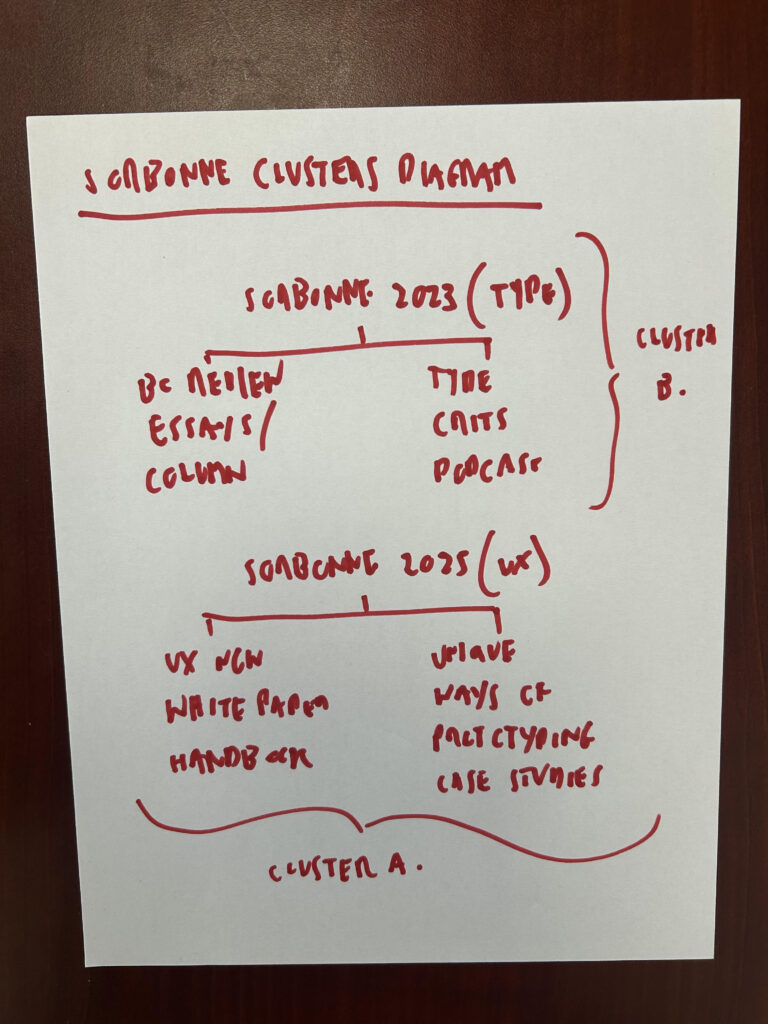
Figure 1. The Sorbonne Clusters System showing the relationship between Girard’s 2023 and 2025 keynote contributions.
Girard, T. (2025). UX Innovation Cluster: A Formal Statement of Thematic Work. Thomas K. Girard. Retrieved from https://thomaskgirard.com/b-formal-typography-cluster-document-press-publisher-ready-2/